Ever cracked open an egg from your trusty egg cooker, only to find a runny, undercooked yolk staring back? It’s a common frustration that can turn a simple breakfast into a culinary disappointment. Achieving perfectly cooked eggs, whether soft, medium, or hard-boiled, hinges on understanding the nuances of your egg cooker, particularly the critical role of water. This guide will delve into the precise reasons your eggs might not be reaching perfection and, more importantly, equip you with the knowledge to master water adjustment for consistently flawless results.
Understanding Your Egg Cooker: More Than Just Boiling Water
An egg cooker is a compact kitchen appliance designed to cook eggs with remarkable consistency and minimal effort, often surpassing traditional stovetop boiling in precision. Its primary function is to generate steam, which then evenly cooks the eggs. Unlike boiling eggs directly in water, where the temperature can fluctuate, an egg cooker provides a controlled environment. The key to its operation lies in a heated plate at the base that boils a measured amount of water, producing steam that circulates around the eggs. This steam then transfers heat to the eggs, cooking them to your desired doneness. The “why you need one” really comes down to convenience, consistency, and the ability to free up stovetop space, making it a favorite for busy mornings or meal prepping.
The Science of Doneness: Why Water is Key to Perfect Eggs
The exact amount of water you add to your egg cooker is the single most critical variable in determining the final doneness of your eggs. This is because the water volume directly controls the duration of steam generation. When the water completely evaporates, the heating element often senses a temperature rise and automatically shuts off, signaling that the cooking cycle is complete.
If your eggs are consistently undercooked, it primarily points to insufficient steam generation, which almost always means you’ve added too little water. With inadequate water, the cooker runs out of steam before the eggs have absorbed enough heat to fully cook through. Conversely, while too much water is less likely to cause undercooked eggs, it can lead to overcooked results or an unnecessarily prolonged cooking cycle. Mastering this water-to-steam relationship is fundamental.
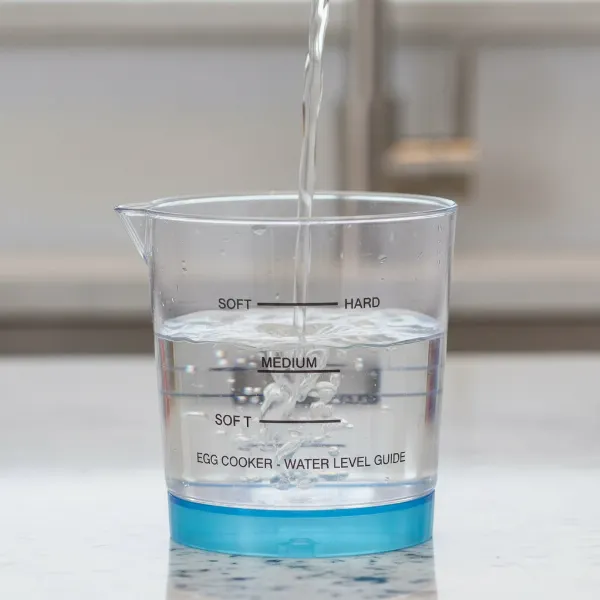 Measuring water for egg cooker, showing precise levels for different doneness.
Troubleshooting Undercooked Eggs: Common Mistakes and Solutions
Finding the perfect water level for your egg cooker can feel like a delicate balancing act, but most issues with undercooked eggs can be traced back to a few key factors.
Is It Your Water Level? Finding the Sweet Spot
The most common reason for undercooked eggs in an egg cooker is simply not using enough water. Each egg cooker typically comes with a measuring cup that has specific markings for different doneness levels (soft, medium, hard) and often for varying numbers of eggs.
- Not Enough Water: This is the primary culprit. If the cooker uses up all its water too quickly, the steam cooking time is cut short, leaving you with runny whites or yolks.
- Measuring Accurately: Always use the measuring cup provided with your specific egg cooker. These cups are calibrated for the appliance’s design. If yours is lost, precise milliliter measurements (if available in your manual) are far more reliable than eyeballing or using standard kitchen tablespoons. For instance, some models might require 40ml for 1-2 soft-boiled eggs, whereas 100ml is needed for 1-2 hard-boiled eggs.
- The Inverse Relationship: Counterintuitively, some egg cookers actually require less water for more eggs. This is because a greater number of eggs takes up more volume within the cooking chamber and absorbs and retains heat more efficiently, meaning less steam is needed to achieve the desired temperature and doneness. Always consult your cooker’s manual for these specific guidelines.
- Testing and Adjusting: If your eggs are consistently too soft, try adding a small increment of water (e.g., 3-5ml) in your next batch. Conversely, if they’re overcooked, reduce the water slightly. Keep a small record of your adjustments to find your ideal settings.
|
Our Picks for the Best Egg cooker in 2026
As an Amazon Associate I earn from qualifying purchases.
|
||
| Num | Product | Action |
|---|---|---|
| 1 | Elite Gourmet EGC322CBL Easy Egg Cooker Electric 7-Egg Capacity, Soft, Medium, Hard-Boiled Egg Cooker with Auto Shut-Off, Measuring Cup Included, BPA Free, Classic Blue |

|
| 2 | Rapid Egg Cooker, 12 Egg Capacity Electric Egg Cooker for Hard Boiled Eggs, Soft, Medium, Poached Eggs, Food & Vegetable Steamer for Breakfast, One-Touch Button, Over-Heat Protect, BPA-Free |
|
| 3 | DASH Electric Rapid Egg Cooker for Hard Boiled/Poached/Scrambled Eggs or Omelets with Auto Shut-Off Feature, Black, 7 Egg Capacity |
|
| 4 | Elite Gourmet EGC-007## Rapid Egg Cooker, 7 Easy-To-Peel, Hard, Medium, Soft Boiled Eggs, Poacher, Omelet Maker, Auto Shut-Off, Alarm, 16-Recipe Booklet, White |
|
| 5 | Elite Gourmet EGC115B Easy Egg Cooker Electric 7-Egg Capacity, Soft, Medium, Hard-Boiled Egg Cooker with Auto Shut-Off, Measuring Cup Included, BPA Free, Classic Black |
|
| 6 | DASH Rapid Egg Cooker: 7 Egg Capacity Electric Egg Cooker for Hard Boiled Eggs, Poached Eggs, Scrambled Eggs, or Omelets. |
|
| 7 | Dash Rapid Egg Cooker - Boiler, Poacher & Steamer - Includes Measuring & Recipe Guide - Dishwasher Safe - Holds 7 Eggs, Aqua |
|
| 8 | Evoloop Rapid Egg Cooker Electric 6 Eggs Capacity, Soft, Medium, Hard Boiled, Poacher, Omelet Maker Egg Poacher With Auto Shut-Off, BPA Free |
|
| 9 | Elite Gourmet EGC115M Easy Egg Cooker Electric 7-Egg Capacity, Soft, Medium, Hard-Boiled Egg Cooker with Auto Shut-Off, Measuring Cup Included, BPA Free, Retro Mint |
|
| 10 | Mojoco Rapid Egg Cooker - Mini Egg Cooker for Steamed, Hard Boiled, Soft Boiled Eggs and Onsen Tamago - Electric Egg Boiler for Home Kitchen, Dorm Use - Smart Egg Maker with Auto Shut OFF and Alarm |
|
Egg Size and Temperature: Unsung Heroes of Consistency
Beyond water, the eggs themselves play a significant role in the cooking outcome.
- Egg Size: Larger eggs, like jumbo or extra-large, contain more mass and will require slightly more steam time—and thus, a bit more water—than standard large eggs to reach the same level of doneness.
- Egg Temperature: Eggs taken directly from the refrigerator are much colder than room-temperature eggs. This temperature difference means cold eggs will absorb more heat from the steam, effectively requiring a slightly longer cooking period (or, in the context of an egg cooker, a slightly increased water amount) to reach the same doneness as a room-temperature egg. For consistent results, some users find starting with room-temperature eggs or increasing the water by a small margin for cold eggs helpful.
The Lid and Vent: Sealing the Deal
The integrity of your egg cooker’s lid and vent is also crucial for efficient steam cooking.
- Lid Not Sealed Properly: If the lid isn’t securely placed or if its seal is damaged, steam can escape prematurely. This loss of steam translates to less heat reaching the eggs, resulting in undercooked results.
- Blocked Vent: The small vent hole in the lid (if present) is designed to release a controlled amount of steam. Ensure it’s not blocked by food residue, as this can affect internal pressure and cooking consistency.
Altitude and Hardness of Water
Environmental factors can also subtly influence your egg cooker’s performance.
- High Altitude: At higher altitudes, water boils at a lower temperature and evaporates more quickly. This means that to achieve the same cooking time, you might need to add a small amount of extra water to compensate for the faster evaporation.
- Hard Water: Over time, mineral deposits from hard water can build up on the heating plate, potentially reducing its efficiency in generating steam. Regular cleaning is essential to maintain optimal performance.
Mastering Your Egg Cooker: A Step-by-Step Guide to Perfect Doneness
Achieving consistently perfect eggs in your egg cooker is a process of understanding and fine-tuning.
The Standard Process: From Start to Finish
- Measure Water Accurately: Using your egg cooker’s measuring cup, add the precise amount of cold water indicated for your desired doneness and number of eggs.
- Pierce Eggs (Optional but Recommended): Many egg cookers come with a piercing pin. Gently pierce the large end of each egg to help prevent cracking during cooking and make peeling easier.
- Place Eggs: Position the eggs on the cooking rack with the pierced end facing up (if you pierced them).
- Secure Lid: Place the lid firmly on the cooker, ensuring it’s properly sealed.
- Start Cooking: Turn on your egg cooker. It will begin to steam the eggs.
- Listen for Alarm: Once the water has fully evaporated, the cooker will typically beep or automatically shut off.
- Cool (Optional): For easier peeling and to stop the cooking process, immediately transfer the cooked eggs to an ice bath or rinse them under cold water.
Fine-Tuning for Your Ideal Egg
The recommended water levels are a starting point. Your personal preference, egg specifics, and even the exact model of your cooker will require some experimentation.
- Soft-Boiled: Begin with the “soft” marking on your measuring cup. If the yolk is too runny for your taste, add an extra 3-5ml of water for your next batch.
- Medium-Boiled: Use the “medium” marking. If you prefer a firmer jammy yolk, increase the water slightly. If it’s too firm, reduce it by a tiny amount.
- Hard-Boiled: Follow the “hard” marking. If the yolk is still slightly creamy or jammy, add a few more milliliters of water next time. If it’s chalky, reduce the water.
- Record Keeping: Consider keeping a small log of the exact water amounts you use, along with the egg size, temperature, and the resulting doneness. This will quickly help you pinpoint your perfect settings.
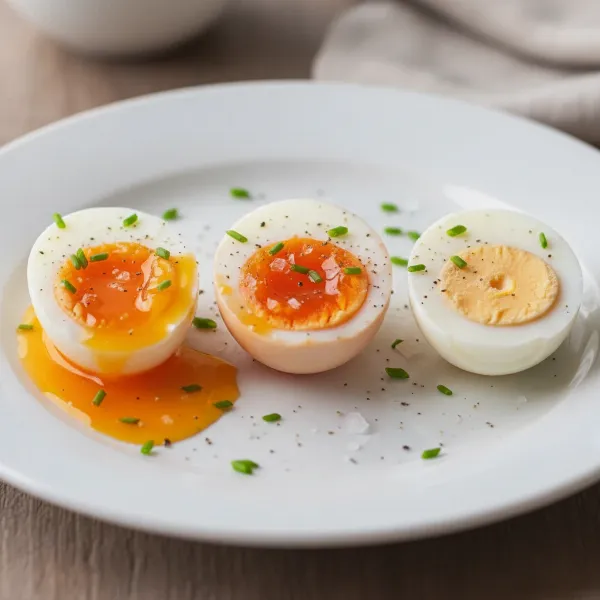 Three half-cut eggs showing soft, medium, and hard-boiled yolks on a plate.
Beyond Water: Maintenance Tips for Consistent Egg Cooking
Consistent performance from your egg cooker isn’t just about water measurement; proper care and maintenance play a vital role.
- Regular Cleaning: The heating plate, where the water boils, can accumulate mineral deposits over time, especially with hard water. This buildup can reduce heating efficiency, leading to inconsistent or undercooked eggs. Clean the plate regularly with a solution of white vinegar and water or a descaling agent. Let it sit for 10-15 minutes, then gently scrub with a non-abrasive sponge and rinse.
- Inspect for Damage: Periodically check the lid’s seal for any cracks or wear that could allow steam to escape. Ensure the piercing pin (if applicable) is clean and sharp.
- Read Your Manual: The user manual provided by the manufacturer is your best friend. It often contains specific water measurement guides, troubleshooting tips, and cleaning instructions tailored to your exact model.
Choosing the Right Egg Cooker for Consistent Results
When selecting an egg cooker, consider features that contribute to consistent egg doneness, especially if you’ve struggled with undercooked results in the past.
Capacity and Features Matter
- Capacity: Think about how many eggs you typically cook. Models range from single-egg cookers to those holding 7-12 eggs.
- Clear Markings: Look for egg cookers with very clear and precise water measurement markings on the cup, preferably with distinctions for soft, medium, and hard-boiled eggs. Some advanced models even have digital controls with pre-set programs, which can simplify the process by handling the “timing” (via water volume) for you.
- Reliable Alarm: An audible alarm that signals when the water has evaporated and cooking is complete is a helpful feature for consistency.
Brand Reputation and Reviews
- Reputable Brands: Investigate brands known for producing reliable kitchen appliances. Established manufacturers often provide better user manuals and customer support.
- User Reviews: Before purchasing, read reviews from other users focusing on their experiences with egg doneness and consistency. Look for comments specifically addressing whether eggs come out as expected for different doneness levels.
“The precise amount of water is the single most critical variable in achieving your desired egg doneness in an egg cooker. It dictates the duration and intensity of the steam.” – Chef Antoine Dubois, Culinary Instructor and Appliance Tester
Conclusion
Undercooked eggs from your egg cooker can be a frustrating experience, but they are almost always a fixable problem. The path to consistently perfect eggs lies in understanding the vital role of water adjustment, recognizing how factors like egg size and temperature influence cooking, and maintaining your appliance. By meticulously measuring water, paying attention to your specific egg cooker’s nuances, and performing regular maintenance, you can transform your kitchen gadget into a reliable tool for creating flawless soft, medium, or hard-boiled eggs every single time. Don’t give up on your egg cooker! Experiment with these tips to find your ideal water measurement and unlock the secret to effortlessly perfect eggs. What’s your go-to trick for perfect egg cooker eggs?
Frequently Asked Questions
Why do my eggs still come out runny even with the right water level?
Several factors could be at play, including the actual size and temperature of your eggs (larger or colder eggs need more water), a loose lid letting steam escape, or mineral buildup on the heating plate reducing efficiency. Ensure your egg cooker is clean and your eggs are at a consistent temperature when possible.
Can I use less water for softer eggs?
Yes, using slightly less water than the standard recommendation for “medium” or “hard” boiled can result in softer eggs, as it reduces the steaming time. However, always ensure there’s enough water to prevent the cooker from drying out too quickly and potentially damaging the appliance.
Does high altitude affect egg cooking in an egg cooker?
Absolutely. At higher altitudes, water boils at a lower temperature, causing it to evaporate faster. This means you might need to add a small amount of extra water to your egg cooker to compensate for the quicker evaporation and ensure your eggs cook for the desired duration.
How do I clean the heating plate to prevent undercooked eggs?
Regularly clean the heating plate to remove mineral deposits. A common method is to add a small amount of white vinegar or a descaling solution to the plate, let it sit for 10-15 minutes, then gently scrub with a non-abrasive sponge and rinse thoroughly. This maintains optimal heating efficiency.
Can undercooked eggs be re-cooked?
Yes, if the shell is intact, you can usually re-cook undercooked eggs. You can place them back in the egg cooker with a small amount of water for an additional short cycle, or put them in a pot of boiling water for a few extra minutes. Avoid microwaving them, as this can cause them to explode.
Why do some egg cooker manuals suggest less water for more eggs?
This seemingly counterintuitive instruction is due to steam efficiency. More eggs occupy a greater volume within the cooking chamber and absorb and retain heat more effectively. This means less steam is required to fill the remaining space and cook the eggs to the desired doneness.