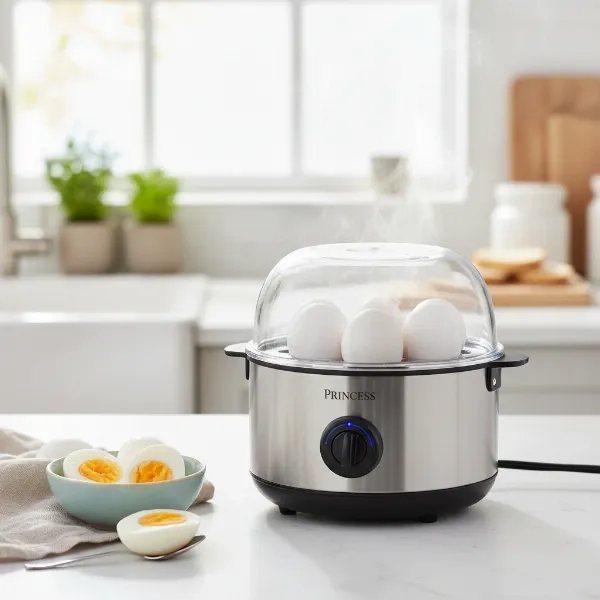
The humble egg cooker has revolutionized breakfast routines for countless homes, taking the guesswork out of achieving perfectly cooked eggs every time. From fluffy omelets to ideal soft-boiled or hard-boiled eggs, these compact kitchen appliances offer unparalleled convenience. However, as you navigate the myriad of options available, one critical decision often arises: should you opt for an egg cooker with a plastic lid or a metal lid? This choice extends beyond mere aesthetics, impacting everything from food safety and durability to cooking performance. In this comprehensive guide, we’ll crack open the core differences, helping you select an egg cooker that perfectly aligns with your needs, health priorities, and culinary aspirations.
What is an Egg Cooker and Why Do You Need One?
An egg cooker is a specialized kitchen appliance designed to cook eggs quickly and consistently, primarily using steam. Instead of monitoring a pot of boiling water on the stovetop, these devices simplify the process to a few easy steps: add water, place eggs on a tray, cover with a lid, and turn it on. The amount of water determines the doneness—soft, medium, or hard-boiled—and many models feature automatic shut-off and audible alerts, eliminating overcooking.
The primary appeal of an electric egg boiler lies in its convenience and ability to deliver perfectly cooked eggs with minimal effort. It ensures uniform results every time, saving you precious minutes during busy mornings and taking the guesswork out of a common kitchen task. For anyone who regularly enjoys eggs, whether for a quick breakfast, meal prepping, or adding to salads, an egg cooker is a hands-free solution that guarantees consistent, delicious outcomes. While traditional methods can be prone to cracked shells or inconsistent textures, an egg cooker offers a foolproof way to achieve your desired egg consistency effortlessly.
 An egg cooker preparing soft, medium, and hard-boiled eggs with consistent results.
Plastic Lids vs. Metal Lids: The Core Differences
When comparing egg cookers, the material of the lid—plastic or metal—is a significant differentiator that influences various aspects of the appliance’s performance and ownership experience. While both types serve the primary function of trapping steam to cook eggs, their inherent material properties lead to distinct advantages and disadvantages across safety, durability, cooking consistency, and overall value. Understanding these differences is crucial for making an informed decision about which egg cooker best suits your kitchen and lifestyle.
Material Composition and Safety Concerns
The most significant distinction between plastic and metal egg cooker lids often revolves around health and safety, especially when subjected to heat.
-
Plastic Lids: Traditionally, many egg cookers have featured plastic lids due to their low manufacturing cost and lightweight nature. While many modern plastic lids are marketed as “BPA-free,” it’s important to understand that this alone may not guarantee complete safety. Research suggests that even BPA-free plastics can contain other concerning chemicals like BPS or BPF, which may mimic estrogen and pose potential health risks. When plastic is exposed to heat, as it frequently is in an egg cooker, there’s a risk of these chemicals, along with microplastics, leaching into your food. These microplastics can negatively impact and disrupt our bodies when ingested, making any heated plastic in contact with food a point of concern for health-conscious consumers. Prioritizing products that are FDA-approved and carry certifications confirming the absence of a broad range of harmful chemicals is advisable for plastic components.
-
Metal Lids (Stainless Steel): Egg cookers with metal lids, typically made from stainless steel, are generally considered a safer and more robust option. Food-grade stainless steel, particularly surgical stainless steel (e.g., 304 grade), is renowned for its inertness and heat resistance. It does not leach chemicals into food, even under high temperatures, effectively eliminating concerns about BPA, BPS, BPF, or microplastic contamination. For those aiming to minimize plastic exposure in their cooking routine, a stainless steel lid offers peace of mind, contributing to a healthier and more non-toxic kitchen environment. The inherent stability of metal provides a reliable barrier, ensuring your eggs are cooked safely without unwanted chemical interactions.
|
Our Picks for the Best Egg cooker in 2026
As an Amazon Associate I earn from qualifying purchases.
|
||
| Num | Product | Action |
|---|---|---|
| 1 | Elite Gourmet EGC322CBL Easy Egg Cooker Electric 7-Egg Capacity, Soft, Medium, Hard-Boiled Egg Cooker with Auto Shut-Off, Measuring Cup Included, BPA Free, Classic Blue |

|
| 2 | DASH Rapid Egg Cooker: 7 Egg Capacity Electric Egg Cooker for Hard Boiled Eggs, Poached Eggs, Scrambled Eggs, or Omelets. |
|
| 3 | Dash Rapid Egg Cooker - Boiler, Poacher & Steamer - Includes Measuring & Recipe Guide - Dishwasher Safe - Holds 7 Eggs, Aqua |
|
| 4 | DASH Electric Rapid Egg Cooker for Hard Boiled/Poached/Scrambled Eggs or Omelets with Auto Shut-Off Feature, Black, 7 Egg Capacity |
|
| 5 | Rapid Egg Cooker, 12 Egg Capacity Electric Egg Cooker for Hard Boiled Eggs, Soft, Medium, Poached Eggs, Food & Vegetable Steamer for Breakfast, One-Touch Button, Over-Heat Protect, BPA-Free |
|
| 6 | Elite Gourmet EGC115M Easy Egg Cooker Electric 7-Egg Capacity, Soft, Medium, Hard-Boiled Egg Cooker with Auto Shut-Off, Measuring Cup Included, BPA Free, Retro Mint |
|
| 7 | Evoloop Rapid Egg Cooker Electric 6 Eggs Capacity, Soft, Medium, Hard Boiled, Poacher, Omelet Maker Egg Poacher With Auto Shut-Off, BPA Free |
|
| 8 | Mojoco Rapid Egg Cooker - Mini Egg Cooker for Steamed, Hard Boiled, Soft Boiled Eggs and Onsen Tamago - Electric Egg Boiler for Home Kitchen, Dorm Use - Smart Egg Maker with Auto Shut OFF and Alarm |
|
| 9 | Elite Gourmet EGC115B Easy Egg Cooker Electric 7-Egg Capacity, Soft, Medium, Hard-Boiled Egg Cooker with Auto Shut-Off, Measuring Cup Included, BPA Free, Classic Black |
|
| 10 | Elite Gourmet EGC-007## Rapid Egg Cooker, 7 Easy-To-Peel, Hard, Medium, Soft Boiled Eggs, Poacher, Omelet Maker, Auto Shut-Off, Alarm, 16-Recipe Booklet, White |
|
Durability and Longevity
Beyond safety, the material of an egg cooker lid directly impacts its long-term durability and how well it withstands the rigors of daily use.
-
Plastic Lids: While initially sturdy, plastic lids are more prone to wear and tear over time, especially with repeated exposure to high heat and steam. They can become discolored, cloudy, brittle, or even crack, affecting both the aesthetics and the functionality of the appliance. Long-term testing often reveals that plastic components, particularly in microwave egg cookers, are more susceptible to becoming brittle, diminishing the overall lifespan of the cooker. This degradation can lead to a less effective seal, compromising cooking performance and requiring earlier replacement of the appliance.
-
Metal Lids (Stainless Steel): Stainless steel lids offer superior durability and longevity. This material is highly resistant to warping, melting, discoloration, and corrosion, even with frequent use and high heat. Stainless steel models are typically fit for long-term use and are known for their robust build quality. A well-constructed metal lid will maintain its structural integrity and aesthetic appeal for years, providing a reliable seal that contributes to consistent cooking performance throughout the appliance’s lifespan. Investing in a stainless steel lid often translates to a more enduring kitchen companion, reducing the need for frequent replacements.
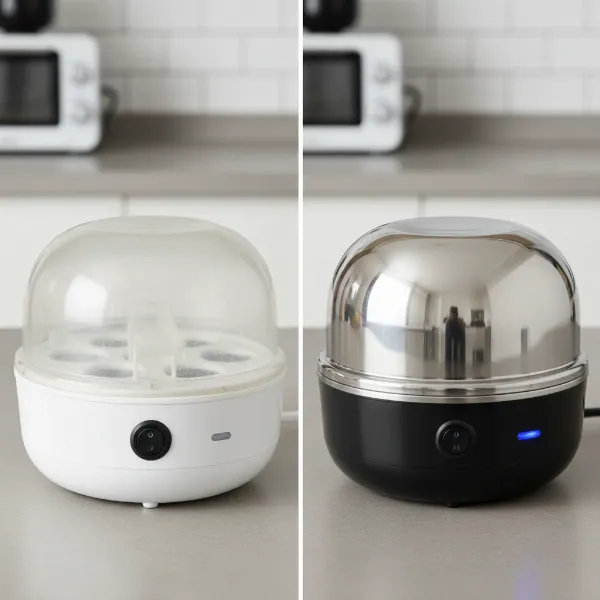 Comparison of an egg cooker with a clear plastic lid and one with a durable stainless steel lid.
Performance and Cooking Consistency
The lid’s material also plays a role in how efficiently and consistently your eggs are cooked.
-
Plastic Lids: While functional, some plastic lids might not offer the same level of thermal efficiency as metal. They can sometimes act as more of an insulator rather than a conductor, potentially leading to slightly less even heat distribution across the cooking chamber. For specific cooking methods, such as poaching eggs in separate cups, inconsistent heat can result in varying doneness, where one side of the egg might be firm while another remains softer. The thickness and design of the plastic can influence its performance, but generally, it’s not as thermally conductive as metal.
-
Metal Lids (Stainless Steel): Metal, particularly stainless steel, excels in thermal conductivity. This means a metal lid facilitates more even heat transfer within the egg cooker, ensuring a consistent steaming environment. For methods like poaching, where precise heat distribution is crucial for a perfectly set white and a runny yolk, a metal cooker delivers superior results. The uniform heating from all sides allows for consistent doneness, making it easier to achieve your desired egg consistency every time. This improved thermal performance contributes to a more reliable and predictable cooking experience.
Aesthetics, Price, and Maintenance
Beyond the core functional differences, practical aspects like appearance, cost, and ease of cleaning also factor into the comparison.
-
Plastic Lids: Egg cookers with plastic lids are often more budget-friendly, making them an accessible option for many consumers. They are typically lighter in weight, which can be a minor advantage for portability or storage. However, plastic surfaces can be porous, potentially absorbing odors and stains over time, especially if not cleaned immediately. While many plastic parts are dishwasher safe, lingering smells or discoloration can be a concern for some users. Their appearance might also degrade faster than metal, becoming cloudy or scratched with use.
-
Metal Lids (Stainless Steel): Stainless steel lids usually come with a higher upfront cost, reflecting their superior material quality and durability. However, this initial investment often pays off in longevity and performance. Aesthetically, stainless steel offers a sleek, modern, and professional look that complements most contemporary kitchens. In terms of maintenance, stainless steel is non-porous and generally easier to clean, resisting stains and odors much more effectively than plastic. Most metal lids are also dishwasher safe, simplifying cleanup. While mineral deposits can occur on the heating plate regardless of lid type, the metal lid itself remains pristine with minimal effort.
“When it comes to egg cookers, the lid isn’t just a cover—it’s a critical component influencing everything from your health to the consistency of your breakfast. Opting for stainless steel is a choice for peace of mind and enduring performance.” – Dr. Alice Chen, Food Science & Appliance Expert
Choosing the Right Egg Cooker for Your Kitchen
With a clear understanding of the differences, selecting the ideal egg cooker becomes a matter of aligning the features with your personal priorities.
Assess Your Priorities: Safety First
If health and minimizing exposure to potential chemicals are your primary concerns, an egg cooker featuring a stainless steel lid and, ideally, other stainless steel components (such as the egg tray or poaching cups) should be your top choice. Look for clear indications of “food-grade stainless steel” or “100% surgical stainless steel” in the product description. While “BPA-free” plastics are better than those containing BPA, the emerging research on BPS, BPF, and microplastics suggests that avoiding heated plastics entirely, where possible, is the most cautious approach for long-term well-being. Prioritizing a non-toxic egg cooker made primarily from metal will offer the greatest assurance.
Consider Your Budget and Usage Frequency
Your budget and how often you plan to use the appliance are also important factors. If you only plan to use an egg cooker occasionally and have a strict budget, a plastic-lid model might seem appealing due to its lower cost. However, for daily or frequent use, the long-term value of a more durable and safer metal-lid egg cooker often outweighs the initial higher price. A stainless steel unit will likely last longer and maintain its performance and appearance better over time, making it a more economical choice in the long run. Consider it an investment in consistent, healthy breakfasts.
Evaluate Additional Features and Brands
Beyond the lid material, evaluate other features that enhance convenience and functionality. Consider the egg capacity that suits your household size, whether it offers multiple cooking modes (soft, medium, hard, poached, omelets), and essential safety features like auto shut-off and dry boil protection. A piercing tool, often included with the measuring cup, is also a useful feature to prevent cracking. Research reputable brands known for quality kitchen appliances, particularly those that offer transparent information about the materials used in their products. Some brands are now specifically designing egg cookers with minimal or no plastic components in contact with food, catering to the growing demand for plastic-free kitchenware.
How to Use and Care for Your Egg Cooker (Regardless of Lid Type)
Proper usage and maintenance will ensure your egg cooker, whether plastic or metal, delivers perfect results and lasts for years.
Most egg cookers operate similarly:
- Measure Water: Use the provided measuring cup to add the precise amount of water to the heating plate, corresponding to your desired egg doneness (soft, medium, or hard-boiled).
- Pierce Eggs: Gently pierce the larger end of each egg with the included piercing tool. This allows air to escape, preventing cracks during cooking and making eggs easier to peel.
- Place Eggs: Position eggs on the cooking rack, ensuring they are stable. If poaching or making omelets, use the designated trays.
- Cover and Cook: Place the lid securely on the cooker and turn it on. The appliance will typically alert you when the water has evaporated and the eggs are ready.
Cleaning and Maintenance Tips:
- Cool Down: Always unplug the egg cooker and allow it to cool completely before cleaning.
- Wipe Heating Plate: After each use, wipe out any residual water from the heating plate with a damp paper towel to prevent mineral buildup.
- Combat Mineral Deposits: If brown mineral stains appear on the heating plate (common with hard water), pour a small amount of white vinegar onto the cool plate. Let it sit for 5-10 minutes, then gently wipe it clean with a soft cloth or paper towel. No harsh scrubbing is required.
- Wash Removable Parts: The lid, egg tray, and any poaching or omelet trays are usually top-rack dishwasher safe. If washing by hand, use warm, soapy water and a mild dish soap.
- Avoid Submerging: Never immerse the main base unit (which contains the electrical components) in water. Wipe it clean with a damp cloth if needed.
- Proper Storage: Store your egg cooker in a dry, cool place.
Conclusion
The choice between a plastic lid and a metal lid egg cooker is more than a trivial decision; it’s a reflection of your priorities regarding safety, durability, and long-term kitchen investment. While plastic options may offer a lower entry price, the potential concerns surrounding chemical leaching and shorter lifespan under heat make stainless steel a compelling, healthier, and more enduring alternative. Metal lids offer superior safety, exceptional durability, and consistent cooking performance, ensuring your eggs are not only perfectly cooked but also free from unwanted contaminants. By understanding these critical differences, you can confidently select an egg cooker that serves your needs for years to come, providing delicious, worry-free eggs every single time.
Which egg cooker lid will you choose to ensure the perfect, healthy start to your day?
Frequently Asked Questions
Are BPA-free plastic egg cookers truly safe?
While “BPA-free” is a step in the right direction, it doesn’t guarantee complete safety. Many BPA-free plastics still contain other chemicals like BPS or BPF, which can also mimic estrogen and pose health risks when heated. For ultimate peace of mind, especially with appliances that involve heat and food contact, minimizing plastic exposure by choosing stainless steel components is often recommended.
Do metal egg cookers cook eggs differently than plastic ones?
Metal egg cookers, particularly those with stainless steel lids and cooking trays, often provide superior thermal conductivity. This results in more even heat distribution and consistent cooking, especially beneficial for achieving precise doneness like perfectly poached eggs with set whites and runny yolks. While both types cook eggs, metal can offer a slight edge in consistency and efficiency due to its material properties.
How do I clean mineral deposits from my egg cooker’s heating plate?
Mineral deposits, often brown stains caused by hard water, are common but easily removed. Ensure the egg cooker is unplugged and cool. Pour a small amount of white vinegar directly onto the heating plate, let it sit for 5-10 minutes, and then gently wipe it clean with a soft cloth or paper towel. The vinegar effectively dissolves the mineral buildup.
Are there fully plastic-free egg cookers available?
Yes, the demand for plastic-free kitchen appliances is growing. You can find egg cookers that are designed with 100% surgical stainless steel for all food-contacting parts, including the lid, egg trays, and even poaching cups. These models offer the highest level of assurance for those looking to eliminate plastic from their cooking processes entirely.