Bringing cooked eggs for lunch is a fantastic way to enjoy a protein-packed meal on the go, whether you’re heading to the office, school, or enjoying a picnic. But have you ever worried about whether your delicious hard-boiled eggs or creamy egg salad will stay safe to eat until lunchtime? The truth is, improper transport can turn a healthy meal into a potential health risk. This guide will walk you through everything you need to know to ensure your cooked eggs remain perfectly safe and delicious from your kitchen to your lunch plate.
The Core Challenge: Keeping Cooked Eggs Safe for Lunch
Cooked eggs, like many perishable foods, are susceptible to bacterial growth if not kept at the correct temperature. Understanding this is the first step to ensuring food safety. The primary concern is the “Danger Zone,” which ranges between 40°F and 140°F (4.4°C and 60°C). Within this temperature range, harmful bacteria such as Salmonella can multiply rapidly, potentially causing foodborne illness.
Leaving cooked eggs or egg-containing dishes in this zone for too long significantly increases the risk. The goal of safe transport is to minimize the time your eggs spend in this hazardous temperature range, allowing you to enjoy your healthy, homemade lunch without worry.
Essential Gear for Safe Egg Transport
The right equipment makes all the difference when it comes to keeping your cooked eggs safe. Investing in a few key items can provide peace of mind and protect your meals.
Insulated Lunch Bags and Coolers
|
Our Picks for the Best Egg cooker in 2026
As an Amazon Associate I earn from qualifying purchases.
|
||
| Num | Product | Action |
|---|---|---|
| 1 | Dash Rapid Egg Cooker - Boiler, Poacher & Steamer - Includes Measuring & Recipe Guide - Dishwasher Safe - Holds 7 Eggs, Aqua |

|
| 2 | DASH Rapid Egg Cooker: 7 Egg Capacity Electric Egg Cooker for Hard Boiled Eggs, Poached Eggs, Scrambled Eggs, or Omelets. |
|
| 3 | Elite Gourmet EGC115M Easy Egg Cooker Electric 7-Egg Capacity, Soft, Medium, Hard-Boiled Egg Cooker with Auto Shut-Off, Measuring Cup Included, BPA Free, Retro Mint |
|
| 4 | Elite Gourmet EGC322CBL Easy Egg Cooker Electric 7-Egg Capacity, Soft, Medium, Hard-Boiled Egg Cooker with Auto Shut-Off, Measuring Cup Included, BPA Free, Classic Blue |
|
| 5 | DASH Electric Rapid Egg Cooker for Hard Boiled/Poached/Scrambled Eggs or Omelets with Auto Shut-Off Feature, Black, 7 Egg Capacity |
|
| 6 | Elite Gourmet EGC-007## Rapid Egg Cooker, 7 Easy-To-Peel, Hard, Medium, Soft Boiled Eggs, Poacher, Omelet Maker, Auto Shut-Off, Alarm, 16-Recipe Booklet, White |
|
| 7 | Rapid Egg Cooker, 12 Egg Capacity Electric Egg Cooker for Hard Boiled Eggs, Soft, Medium, Poached Eggs, Food & Vegetable Steamer for Breakfast, One-Touch Button, Over-Heat Protect, BPA-Free |
|
| 8 | Evoloop Rapid Egg Cooker Electric 6 Eggs Capacity, Soft, Medium, Hard Boiled, Poacher, Omelet Maker Egg Poacher With Auto Shut-Off, BPA Free |
|
| 9 | Elite Gourmet EGC115B Easy Egg Cooker Electric 7-Egg Capacity, Soft, Medium, Hard-Boiled Egg Cooker with Auto Shut-Off, Measuring Cup Included, BPA Free, Classic Black |
|
| 10 | Mojoco Rapid Egg Cooker - Mini Egg Cooker for Steamed, Hard Boiled, Soft Boiled Eggs and Onsen Tamago - Electric Egg Boiler for Home Kitchen, Dorm Use - Smart Egg Maker with Auto Shut OFF and Alarm |
|
An insulated lunch bag or cooler is your first line of defense against temperature fluctuations. These bags are designed to maintain internal temperatures for several hours, keeping cold foods cold and hot foods hot. Choose a size that accommodates your entire lunch, allowing enough space for cold sources without crushing your food. For longer commutes or warmer conditions, a small personal cooler might be more effective than a standard lunch bag.
The Power of Cold Sources
Simply having an insulated bag isn’t enough; you need to actively introduce cold.
- Ice Packs or Frozen Gel Packs: These are indispensable. For optimal cooling, use at least two packs—one placed on the bottom of your lunch bag and another on top of your perishable items. This creates a cold envelope around your food.
- Frozen Water Bottles or Juice Boxes: These serve a dual purpose: they act as a cold source and provide a refreshing drink later in the day. Just like gel packs, place them strategically to surround your eggs.
Always freeze your gel packs or water bottles overnight to ensure maximum chilling power. When packing, position them so that they are in direct contact with your egg containers for the most effective temperature transfer.
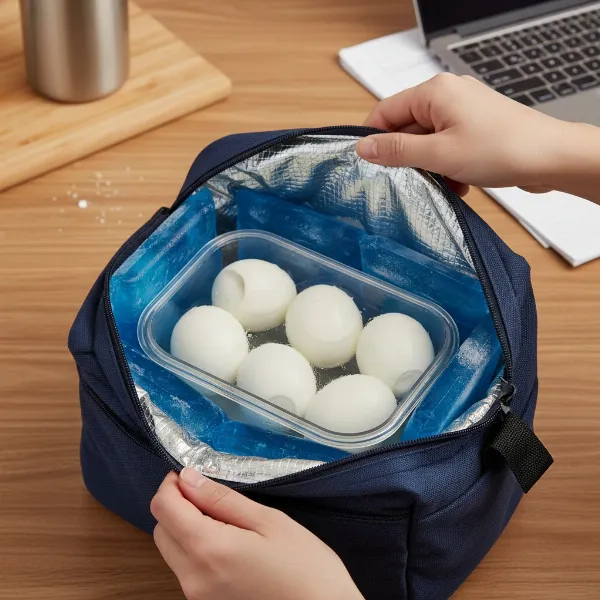 Insulated lunch bag with ice packs keeping hard-boiled eggs cold for safe transport to work or school.
Choosing the Right Containers
The right container protects your eggs from physical damage and helps maintain temperature and freshness.
- Airtight Containers: For whole hard-boiled eggs (peeled or unpeeled) or egg salads, airtight containers are crucial. They prevent odors from escaping or contaminating other foods and keep harmful microorganisms at bay. Glass containers offer excellent insulation and are non-reactive, while BPA-free plastic options are lightweight and durable.
- Separate Compartments: If you’re transporting delicate egg dishes like deviled eggs, consider containers with separate compartments to prevent them from shifting and getting damaged. For deviled eggs, some experts recommend transporting the yolk filling and egg white halves separately with ice packs, then assembling just before consumption.
“The seal on your container is just as important as the insulation of your bag,” advises a food safety specialist. “It forms a barrier against external contaminants and helps to lock in the desired temperature.”
Preparation is Key: Before You Pack
Safe transport starts long before you pack your lunch. Proper preparation of your cooked eggs is foundational to their safety.
Thorough Cooking
Ensure your eggs are thoroughly cooked. For hard-boiled eggs, this means the yolk and white should be firm. Undercooked eggs, even lightly, carry a higher risk of bacterial presence. A fully cooked egg is a safer egg.
Rapid Cooling
Once cooked, eggs need to be cooled quickly before being refrigerated or packed.
- Ice Bath Method: Immediately after boiling, transfer your eggs to an ice bath for several minutes. This rapidly stops the cooking process and brings their temperature down.
- Complete Cooling: Never pack warm or hot eggs directly into your lunch bag. “When hot items are placed in a cold environment, they can warm up other surrounding items, potentially pushing them into the temperature danger zone,” explains Tracey Brigman, a clinical associate professor and associate director for the National Center for Home Food Preservation at the University of Georgia. Allow them to cool completely to refrigerator temperature (below 40°F / 4.4°C) before packing.
To Peel or Not to Peel?
This is a common question with a clear food safety answer.
- Unpeeled Eggs: Hard-boiled eggs with their shells intact offer a natural protective layer that helps shield them from external bacteria and odors. They can be refrigerated safely for up to one week in a loosely covered container. For transport, placing them in an airtight container within an insulated bag is still recommended.
- Peeled Eggs: Once the shell is removed, the egg becomes more vulnerable. The protective cuticle is gone, making it more susceptible to air and harmful microorganisms. Peeled hard-boiled eggs should ideally be consumed on the same day they are peeled, or at most, within 24 hours if stored in an airtight container in the refrigerator. If you’re packing peeled eggs for lunch, ensure they are kept consistently cold.
Packing Strategies for Optimal Safety
With your eggs cooked, cooled, and your gear ready, it’s time to pack strategically.
- Start Cold: Begin with fully refrigerated cooked eggs.
- Cleanliness First: Always wash your hands, cutting boards, and utensils thoroughly with soap and warm water before handling and packing food to prevent cross-contamination.
- Layer for Cold: Place a frozen gel pack or water bottle at the bottom of your insulated lunch bag.
- Containerize Eggs: Put your hard-boiled eggs (peeled or unpeeled) or egg salad in airtight containers. If bringing deviled eggs, pack the filling and whites separately if possible, assembling at your destination.
- Position Eggs: Place the egg containers on top of the bottom cold source.
- Add More Cold: Place another frozen gel pack or water bottle on top of your egg containers.
- Seal and Go: Close your insulated bag securely.
For egg-based dishes like egg salad sandwiches, consider freezing the sandwich itself the night before to provide an additional cold source.
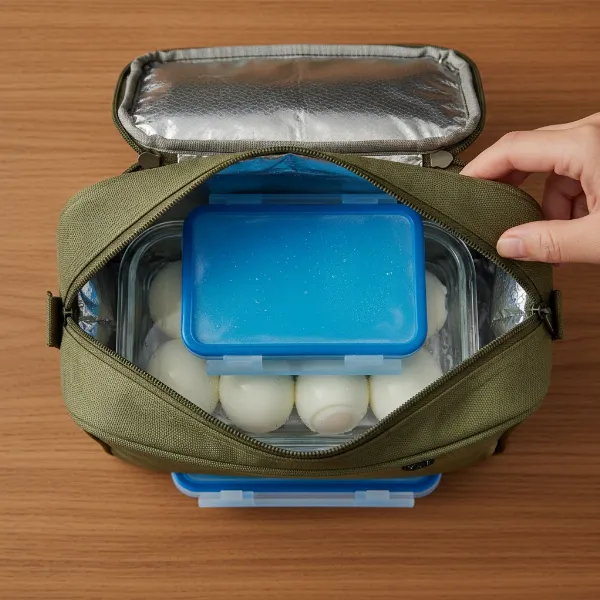 Step-by-step process of packing hard-boiled eggs safely in an insulated lunch bag for meal prep.
On-the-Go and Beyond: Maintaining Safety
Your vigilance doesn’t end once the lunch bag is packed. How you manage your lunch throughout the day is equally important.
- Avoid Heat Sources: Keep your insulated lunch bag out of direct sunlight and away from any heat sources (e.g., car dashboard, radiator, hot vents) as much as possible. Transport it in the passenger compartment of your car rather than the warmer trunk.
- Utilize Refrigeration: If a refrigerator is available at your workplace or school, transfer your perishable egg items to it as soon as you arrive. Remember to leave the lid of your insulated bag or container slightly ajar in the refrigerator to allow cold air to circulate effectively.
- The Two-Hour Rule: Perishable foods, including cooked eggs, should not be left at room temperature for more than two hours. If the ambient temperature is 90°F (32.2°C) or above, this window shrinks to just one hour. If you’re unsure how long the food has been out of safe temperature range, it’s always best to err on the side of caution and discard it.
- Discard Leftovers: Any leftover cooked eggs or egg dishes from your lunch should not be kept for later. Discard them to prevent potential illness.
“Food safety is a proactive effort,” says Jeanine Flaherty, vice president of food safety and quality assurance at Vital Farms. “Always prioritize keeping perishable items cold, and when in doubt, throw it out.”
Your Guide to Worry-Free Egg Lunches
Successfully transporting cooked eggs for lunch boils down to a few critical practices. By integrating these habits into your routine, you can consistently enjoy delicious and safe egg-based meals.
Prioritize Food Safety
Always remember that cooked eggs are perishable. Chilling them quickly and maintaining a cold temperature during transport are non-negotiable steps to prevent harmful bacterial growth.
Smart Container Choices
Opt for airtight, sturdy containers that protect your eggs and keep them at their intended temperature. Consider how the egg will be eaten—whole, peeled, or as part of a salad—when selecting your container.
Stay Informed
Understanding the “Danger Zone” and the two-hour (or one-hour) rule empowers you to make informed decisions about your food’s safety, whether you’re at home or on the go.
Embrace these strategies, and you’ll transform your packed lunch experience. Say goodbye to food safety worries and hello to wholesome, satisfying egg lunches, wherever your day takes you.
Frequently Asked Questions
How long can cooked eggs stay out at room temperature?
Cooked eggs, including hard-boiled eggs and dishes containing them, should not be left at room temperature for more than two hours. If the temperature is 90°F (32.2°C) or higher, this time limit is reduced to one hour due to rapid bacterial growth in warm conditions.
Should I peel hard-boiled eggs before packing for lunch?
It is generally recommended to keep hard-boiled eggs unpeeled until you are ready to eat them. The shell provides a natural protective barrier against bacteria and helps maintain freshness. If you do peel them, ensure they are stored in an airtight container and consumed within 24 hours.
Can I freeze cooked eggs for lunch?
While you can technically freeze cooked eggs, the quality often suffers, especially for hard-boiled eggs, as the whites can become rubbery. For best taste and texture, it’s generally not recommended to freeze whole cooked eggs for lunch. Egg yolks, however, can be frozen.
What about egg salad or deviled eggs for lunch?
Egg salad and deviled eggs are highly perishable due to ingredients like mayonnaise and the increased surface area of the egg. They must be kept consistently cold in an insulated lunch bag with ice packs. For deviled eggs, separating the yolk filling from the whites and assembling just before eating can further enhance safety. Commercial mayonnaise is generally safe due to its acidity, but homemade versions with raw eggs carry a higher risk.