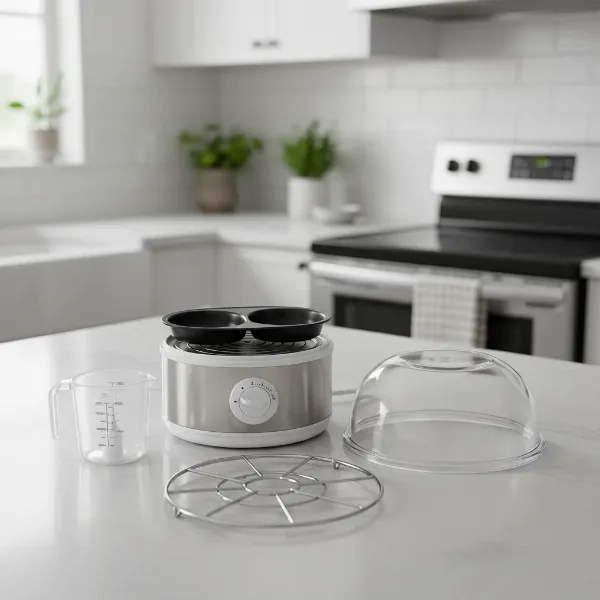
As an administrator with over a decade of experience in egg cooker technology, from the simplest models to advanced, high-tech units, I’ve seen firsthand how crucial proper maintenance is for these handy kitchen appliances. One of the most common issues users face is the buildup of mineral deposits on the heating plate, often mistaken for rust or damage. The good news? Descaling your egg cooker is remarkably simple, and you likely already have the main ingredients in your pantry: white vinegar and water. This guide will walk you through everything you need to know to keep your egg cooker sparkling and performing its best.
What is an Egg Cooker? Why Do You Need One?
An egg cooker is a small kitchen appliance designed to effortlessly cook eggs to your desired consistency, whether soft-boiled, hard-boiled, or poached. It typically consists of a heating plate, an egg tray, a lid, and a measuring cup to add the precise amount of water needed. These devices simplify egg preparation, offering consistent results without the need for constant monitoring, unlike traditional stovetop methods.
The primary benefit of using an egg cooker over conventional boiling is convenience and precision. With preset cooking times and automatic shut-off functions, you can achieve perfect eggs every time, freeing you from guesswork. Furthermore, egg cookers minimize mess and offer a safer alternative to boiling water on a stovetop. For busy individuals or anyone looking for a foolproof way to prepare eggs, an egg cooker is an invaluable kitchen tool, ensuring hygienic and efficient egg preparation. Regular cleaning ensures hygiene, prevents bacteria and mold buildup, maintains even heat distribution for consistent cooking, and reduces wear and tear, extending the life of your appliance.
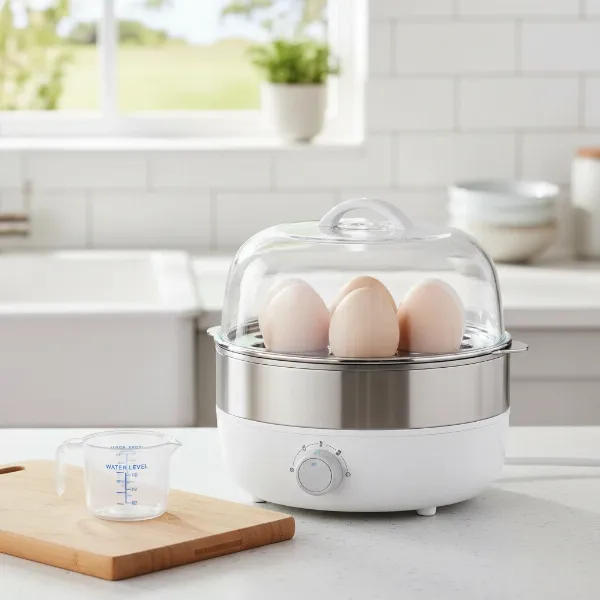 Modern egg cooker with cooked eggs, ready for serving in a clean kitchen setting.
Understanding Mineral Deposits: The White Residue Explained
The white, chalky residue you might notice on your egg cooker’s heating plate isn’t a sign of a faulty appliance or corrosion; it’s simply mineral buildup, often referred to as “scale.” This is a completely normal occurrence, primarily caused by the minerals present in your tap water, especially in hard water areas. When water heats up and evaporates, these minerals (like calcium and magnesium) are left behind, forming a layer on the heating surface. Additionally, some pigments from eggshells, particularly brown eggs, can contribute to this discoloration.
While these deposits are not harmful to your health, they can significantly impact your egg cooker’s performance and longevity. A thick layer of scale can reduce heating efficiency, leading to longer cooking times and inconsistent results. It can also cause the appliance to work harder, potentially shortening its lifespan. Therefore, regular descaling is a vital part of maintaining your egg cooker.
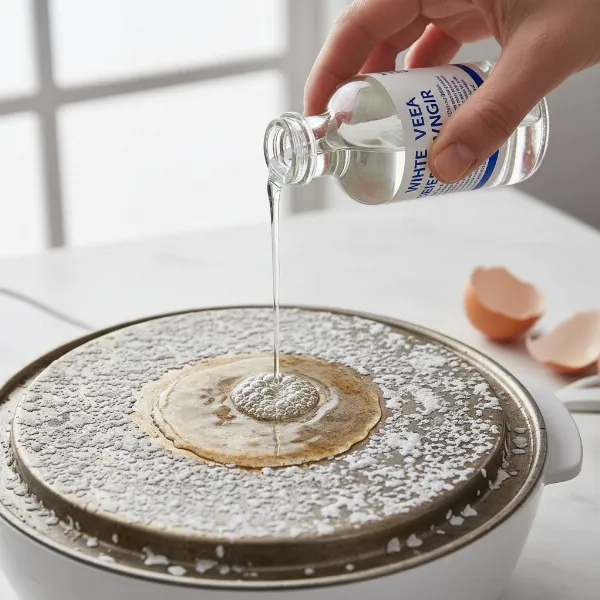 Hand pouring white vinegar onto an egg cooker's heating plate with mineral deposits.
How to Descale Your Egg Cooker with Vinegar and Water
Descaling your egg cooker with white vinegar and water is a straightforward process that will restore its efficiency and appearance. Here’s a step-by-step guide:
-
Safety First: Unplug and Cool Down
Always ensure your egg cooker is unplugged from the power outlet and completely cool before you begin cleaning. This prevents accidental burns or electrical hazards. -
Disassemble Removable Parts
Remove the lid, egg tray, and any poaching or steaming trays. These parts can be washed separately with warm, soapy water. Avoid abrasive scrubbers that could scratch plastic components. -
Prepare the Descaling Solution
For general water stains and light mineral buildup, mix equal parts white vinegar and water. You’ll typically need about 1-2 tablespoons of each, just enough to cover the heating plate. For more stubborn scale, you can use undiluted white vinegar. -
Apply the Solution to the Heating Plate
Carefully pour the vinegar and water mixture directly onto the heating plate, ensuring it covers all the affected areas. Do not immerse the entire base of the egg cooker in water. -
Let it Sit and Work its Magic
Allow the solution to sit on the heating plate for 5 to 10 minutes. For tougher stains, you might extend this to 30 minutes, or even an hour. The acetic acid in the vinegar will react with the mineral deposits, breaking them down. -
Wipe Away the Residue
After soaking, use a soft cloth or sponge to gently wipe away the dissolved mineral deposits. You should see the white residue easily lifting off. Avoid using steel wool or harsh abrasive cleaners, which can damage the non-stick surface of the heating plate. -
Rinse and Dry Thoroughly
Dampen a clean cloth with fresh water and wipe the heating plate several times to remove any vinegar residue and ensure it’s thoroughly rinsed. Allow all parts to air dry completely before reassembling or storing your egg cooker.
“Regular descaling with natural solutions like vinegar is the simplest yet most effective way to ensure your egg cooker delivers perfectly cooked eggs every time and lasts for years. It’s a small effort with a big impact on your appliance’s performance.” – Admin of eggcookersreview.com, Egg Cooker Specialist
When and How Often Should You Descale?
The frequency of descaling depends largely on how often you use your egg cooker and the hardness of your local water.
- Monthly: If you use your egg cooker regularly (several times a week), a monthly descaling is recommended to prevent significant buildup.
- As Needed: If you notice white residue or water stains appearing on the heating plate, it’s a clear sign that it’s time to descale, regardless of your last cleaning date.
- Preventative: Some users find that wiping the heating plate with a vinegar and water solution after every few uses can help prevent heavy mineral deposits from forming in the first place.
Consistency is key to maintaining your egg cooker’s efficiency and extending its lifespan.
Tips for Maintaining a Sparkling Egg Cooker
Beyond descaling, a few simple habits can help keep your egg cooker in top condition:
- Clean After Every Use: Wipe down the heating plate with a damp cloth and wash removable parts with warm soapy water after each use.
- Use Filtered Water: If you live in an area with particularly hard water, using filtered or distilled water can significantly slow down the mineral buildup process.
- Avoid Overfilling: Always use the recommended amount of water in the measuring cup. Overfilling can lead to residue splashing onto other parts of the cooker.
- Store Properly: Ensure all parts are completely dry before reassembling and storing your egg cooker in a clean, dry place.
By following these simple cleaning and maintenance tips, you can enjoy perfectly cooked eggs from a pristine appliance for years to come.
Conclusion
Keeping your egg cooker free from mineral deposits is a vital part of routine maintenance that ensures optimal performance and extends the life of your appliance. White vinegar and water offer a safe, effective, and natural solution to tackle scale buildup, restoring your heating plate to its original shine. By incorporating this simple descaling routine into your cleaning schedule, you’ll continue to enjoy consistently perfect eggs, day after day.
Isn’t it amazing how a little vinegar can make such a big difference?
Frequently Asked Questions
Why does my egg cooker have white residue on the bottom?
|
Our Picks for the Best Egg cooker in 2026
As an Amazon Associate I earn from qualifying purchases.
|
||
| Num | Product | Action |
|---|---|---|
| 1 | Dash Rapid Egg Cooker - Boiler, Poacher & Steamer - Includes Measuring & Recipe Guide - Dishwasher Safe - Holds 7 Eggs, Aqua |

|
| 2 | Elite Gourmet EGC115B Easy Egg Cooker Electric 7-Egg Capacity, Soft, Medium, Hard-Boiled Egg Cooker with Auto Shut-Off, Measuring Cup Included, BPA Free, Classic Black |
|
| 3 | Elite Gourmet EGC322CBL Easy Egg Cooker Electric 7-Egg Capacity, Soft, Medium, Hard-Boiled Egg Cooker with Auto Shut-Off, Measuring Cup Included, BPA Free, Classic Blue |
|
| 4 | Rapid Egg Cooker, 12 Egg Capacity Electric Egg Cooker for Hard Boiled Eggs, Soft, Medium, Poached Eggs, Food & Vegetable Steamer for Breakfast, One-Touch Button, Over-Heat Protect, BPA-Free |
|
| 5 | Elite Gourmet EGC115M Easy Egg Cooker Electric 7-Egg Capacity, Soft, Medium, Hard-Boiled Egg Cooker with Auto Shut-Off, Measuring Cup Included, BPA Free, Retro Mint |
|
| 6 | DASH Rapid Egg Cooker: 7 Egg Capacity Electric Egg Cooker for Hard Boiled Eggs, Poached Eggs, Scrambled Eggs, or Omelets. |
|
| 7 | Evoloop Rapid Egg Cooker Electric 6 Eggs Capacity, Soft, Medium, Hard Boiled, Poacher, Omelet Maker Egg Poacher With Auto Shut-Off, BPA Free |
|
| 8 | Elite Gourmet EGC-007## Rapid Egg Cooker, 7 Easy-To-Peel, Hard, Medium, Soft Boiled Eggs, Poacher, Omelet Maker, Auto Shut-Off, Alarm, 16-Recipe Booklet, White |
|
| 9 | Mojoco Rapid Egg Cooker - Mini Egg Cooker for Steamed, Hard Boiled, Soft Boiled Eggs and Onsen Tamago - Electric Egg Boiler for Home Kitchen, Dorm Use - Smart Egg Maker with Auto Shut OFF and Alarm |
|
| 10 | DASH Electric Rapid Egg Cooker for Hard Boiled/Poached/Scrambled Eggs or Omelets with Auto Shut-Off Feature, Black, 7 Egg Capacity |
|
The white residue is typically mineral buildup, also known as scale, caused by the evaporation of hard water. Minerals like calcium and magnesium are left behind, forming a chalky layer on the heating plate.
Is it safe to use an egg cooker with mineral deposits?
While generally safe, mineral deposits can reduce your egg cooker’s efficiency, leading to longer cooking times and inconsistent egg doneness. It can also strain the appliance over time, potentially shortening its lifespan.
Can I use other types of vinegar to descale my egg cooker?
White vinegar is highly recommended for descaling due to its ideal acidity and lack of color, which prevents staining. Other vinegars, such as apple cider vinegar, might work but could leave behind a residue or odor due to their sugar content and color.
How much vinegar should I use for descaling?
For light deposits, an equal parts mixture of white vinegar and water (e.g., 1-2 tablespoons of each) is usually sufficient. For more stubborn scale, you can use undiluted white vinegar, ensuring it covers the affected areas on the heating plate.
How often should I descale my egg cooker?
It’s generally recommended to descale your egg cooker monthly if you use it frequently. However, if you notice white residue appearing sooner, it’s best to descale immediately to maintain performance.