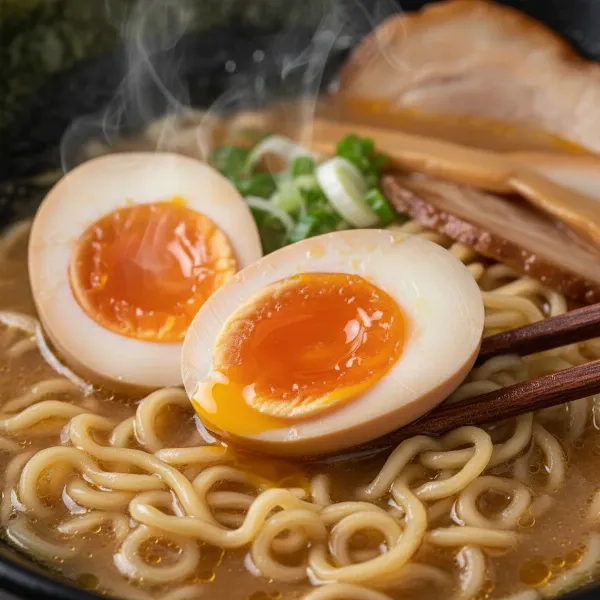
Onsen Tamago, or Japanese hot spring eggs, are a culinary delight cherished for their unique texture: tender, custardy whites that are softer than the creamy, almost gelatinous yolk. This delicate balance is achieved through a slow cooking process at a precise, lower temperature, mimicking the natural hot springs of Japan where these eggs traditionally originate. While an actual hot spring might be out of reach, you can effortlessly recreate this exquisite experience in your own kitchen with minimal equipment.
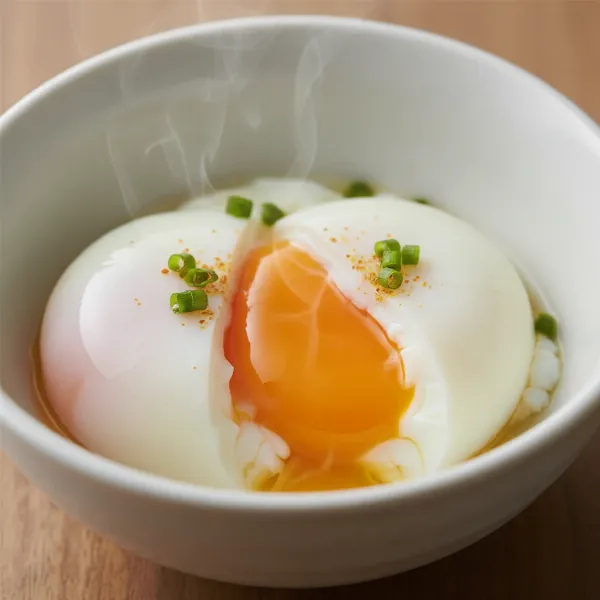 Close-up of onsen tamago, showing its unique creamy yolk and silky soft white texture.
The Secret Behind Onsen Tamago
The magic of Onsen Tamago lies in the different temperatures at which egg whites and yolks set. Unlike standard soft-boiled eggs where the white sets before the yolk, Onsen Tamago is cooked at a temperature where the yolk slowly thickens to a custard-like consistency while the white remains incredibly silky and just barely set. This typically occurs in a temperature range of 149–158°F (65–70°C), a temperature often found in Japanese hot springs.
Simple Method to Make Onsen Tamago Without Special Equipment
You don’t need a sous vide machine or a thermometer to achieve perfect onsen tamago. A pot, water, and eggs are all you need. The key is to create a controlled drop in water temperature after boiling.
What You’ll Need:
- 2-4 large eggs (straight from the refrigerator)
- 4 cups (about 1 liter) of water for boiling
- 1 cup (about 200-250 ml) of lukewarm or room temperature water
- A heavy-bottomed pot with a lid (for better heat retention)
- An ice bath (optional, but recommended to stop cooking)
|
Our Picks for the Best Egg cooker in 2026
As an Amazon Associate I earn from qualifying purchases.
|
||
| Num | Product | Action |
|---|---|---|
| 1 | Elite Gourmet EGC115M Easy Egg Cooker Electric 7-Egg Capacity, Soft, Medium, Hard-Boiled Egg Cooker with Auto Shut-Off, Measuring Cup Included, BPA Free, Retro Mint |

|
| 2 | Mojoco Rapid Egg Cooker - Mini Egg Cooker for Steamed, Hard Boiled, Soft Boiled Eggs and Onsen Tamago - Electric Egg Boiler for Home Kitchen, Dorm Use - Smart Egg Maker with Auto Shut OFF and Alarm |
|
| 3 | Rapid Egg Cooker, 12 Egg Capacity Electric Egg Cooker for Hard Boiled Eggs, Soft, Medium, Poached Eggs, Food & Vegetable Steamer for Breakfast, One-Touch Button, Over-Heat Protect, BPA-Free |
|
| 4 | Elite Gourmet EGC322CBL Easy Egg Cooker Electric 7-Egg Capacity, Soft, Medium, Hard-Boiled Egg Cooker with Auto Shut-Off, Measuring Cup Included, BPA Free, Classic Blue |
|
| 5 | DASH Electric Rapid Egg Cooker for Hard Boiled/Poached/Scrambled Eggs or Omelets with Auto Shut-Off Feature, Black, 7 Egg Capacity |
|
| 6 | DASH Rapid Egg Cooker: 7 Egg Capacity Electric Egg Cooker for Hard Boiled Eggs, Poached Eggs, Scrambled Eggs, or Omelets. |
|
| 7 | Dash Rapid Egg Cooker - Boiler, Poacher & Steamer - Includes Measuring & Recipe Guide - Dishwasher Safe - Holds 7 Eggs, Aqua |
|
| 8 | Elite Gourmet EGC-007## Rapid Egg Cooker, 7 Easy-To-Peel, Hard, Medium, Soft Boiled Eggs, Poacher, Omelet Maker, Auto Shut-Off, Alarm, 16-Recipe Booklet, White |
|
| 9 | Evoloop Rapid Egg Cooker Electric 6 Eggs Capacity, Soft, Medium, Hard Boiled, Poacher, Omelet Maker Egg Poacher With Auto Shut-Off, BPA Free |
|
| 10 | Elite Gourmet EGC115B Easy Egg Cooker Electric 7-Egg Capacity, Soft, Medium, Hard-Boiled Egg Cooker with Auto Shut-Off, Measuring Cup Included, BPA Free, Classic Black |
|
Step-by-Step Instructions:
- Bring Water to a Boil: In your heavy-bottomed pot, bring 4 cups of water to a rolling boil.
- Adjust Temperature: Once the water is vigorously boiling, remove the pot from the heat immediately. Pour in 1 cup of lukewarm or room temperature water. This crucial step lowers the overall water temperature to the ideal range for slow cooking the eggs.
- Add Eggs: Gently lower the cold eggs directly from the refrigerator into the hot water. Using cold eggs helps further stabilize the cooking temperature. Ensure the eggs are fully submerged.
- Cook: Cover the pot tightly with its lid and let the eggs sit undisturbed for 15 to 18 minutes. The exact time can be adjusted based on your desired level of firmness – longer for a slightly firmer yolk, shorter for more liquid.
- Stop Cooking (Optional but Recommended): Immediately transfer the cooked eggs to an ice bath for 5-10 minutes. This halts the cooking process, ensuring your eggs retain their perfect delicate texture. If you plan to serve them warm immediately, this step can be skipped, but be mindful of carryover cooking.
- Peel and Serve: Gently crack the eggs and carefully scoop out the onsen tamago. The whites will be delicate, so handle with care.
Serving Suggestions
Onsen Tamago is incredibly versatile and can elevate many dishes:
- Classic Japanese Breakfast: Serve simply with a drizzle of mentsuyu (noodle soup base) or a homemade dashi-based sauce, and a sprinkle of chopped green onions over hot steamed rice.
- Ramen Topping: Add an onsen tamago to your favorite bowl of ramen for extra richness and protein.
- Noodle Dishes: It’s a fantastic addition to udon or soba, lending a creamy element.
- Rice Bowls (Donburi): Perfect on top of gyudon, oyakodon, or any savory rice bowl.
- Simple Side Dish: Enjoy on its own with a dash of soy sauce and a sprinkle of flaky sea salt.
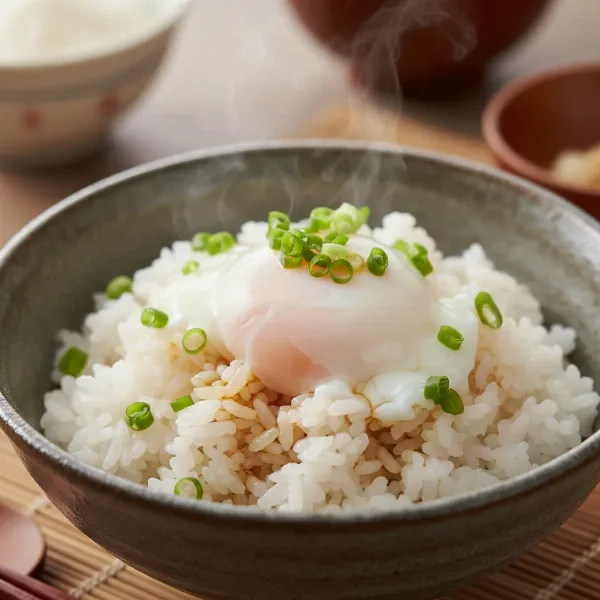 Onsen tamago served atop hot steamed rice with green onions and a drizzle of sauce.
Mastering onsen tamago at home is a rewarding experience, allowing you to enjoy a taste of Japanese culinary tradition with a delightfully unique egg texture. Experiment with cooking times to find your perfect onsen tamago consistency and enjoy this silky smooth delicacy anytime.