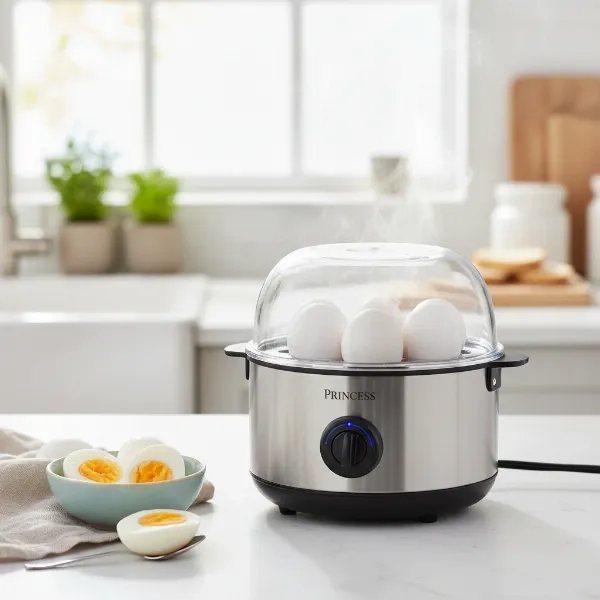
Transforming a simple bowl of ramen into an elevated culinary experience often hinges on one key ingredient: the perfect soft-boiled egg. With its rich, jammy yolk and savory exterior, a well-made ramen egg adds an unparalleled depth of flavor and texture. If you’ve ever wondered how Japanese ramen shops achieve that iconic, irresistible egg, you’re in the right place. This guide will walk you through every step to master the art of making these delightful soft-boiled eggs, ensuring your ramen bowls, or even your everyday snacks, are always topped with perfection.
What Are Ramen Eggs and Why Are They a Must-Have?
Ramen eggs, known in Japan as *Ajitsuke Tamago* (or simply *Ajitama*), are Japanese soft-boiled eggs distinguished by their creamy, jammy, or slightly runny yolk and their incredibly savory, umami-rich flavor. They are traditionally marinated in a sweetened soy-based sauce, which imbues them with a distinct brown hue and a complex taste profile that perfectly complements the savory broth of ramen noodles.
Beyond their aesthetic appeal and exquisite flavor, ramen eggs offer a textural contrast that enhances the entire ramen eating experience. The silky whites and luscious yolks provide a creamy counterpoint to the bouncy noodles and hearty broth. While they are a quintessential ramen topping, their versatility extends far beyond; they make an excellent snack, a flavorful addition to bento boxes, salads, or even avocado toast. The nuanced flavor and satisfying texture elevate these eggs far beyond what traditional hard-boiled methods can achieve.
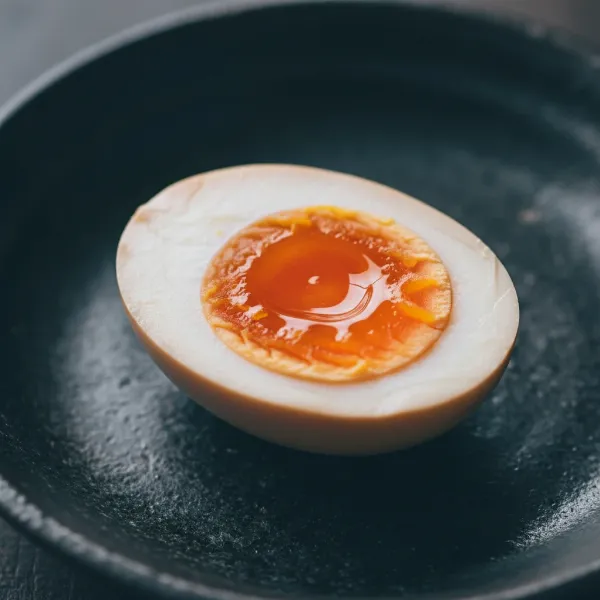 Close-up of a perfectly halved ramen egg with a jammy yolk, ready to be served.
The Essential Ingredients for Authentic Ramen Eggs
Crafting the perfect soft-boiled ramen egg requires just a few basic ingredients for both the egg itself and its transformative marinade. Quality ingredients will always yield the best results.
For the eggs:
- Large Eggs: Refrigerated eggs are generally recommended. For easier peeling, some sources suggest using eggs that are slightly older (a few days past purchase, not fresh from the farm), as they tend to peel more cleanly.
For the marinade (Ajitsuke Tamago):
- Soy Sauce: The foundation of the savory flavor. Use a good quality Japanese soy sauce for authentic taste.
- Mirin: Japanese sweet cooking rice wine, essential for adding sweetness and depth to the marinade.
- Sake: Japanese rice wine. Sake adds another layer of umami and sweetness. While optional, and can be substituted with water, it is highly recommended for enhancing flavor. The alcohol cooks off during preparation.
- Sugar: A small amount of sugar balances the savory notes of the soy sauce and mirin, contributing to the marinade’s characteristic sweet and salty profile.
Optional additions to the marinade can include dashi granules, sliced ginger, or a piece of Japanese leek (naganegi) for added aroma and complexity, but the basic four ingredients will give you an excellent result.
Step-by-Step Guide: Crafting Your Perfect Soft-Boiled Ramen Eggs
Achieving that ideal jammy yolk and flavorful marinade is a straightforward process when you follow a few precise steps. Precision in timing is key to success.
Preparing Your Marinade (Ajitsuke Tamago Base)
|
Our Picks for the Best Egg cooker in 2026
As an Amazon Associate I earn from qualifying purchases.
|
||
| Num | Product | Action |
|---|---|---|
| 1 | DASH Rapid Egg Cooker: 7 Egg Capacity Electric Egg Cooker for Hard Boiled Eggs, Poached Eggs, Scrambled Eggs, or Omelets. |

|
| 2 | Elite Gourmet EGC115M Easy Egg Cooker Electric 7-Egg Capacity, Soft, Medium, Hard-Boiled Egg Cooker with Auto Shut-Off, Measuring Cup Included, BPA Free, Retro Mint |
|
| 3 | Evoloop Rapid Egg Cooker Electric 6 Eggs Capacity, Soft, Medium, Hard Boiled, Poacher, Omelet Maker Egg Poacher With Auto Shut-Off, BPA Free |
|
| 4 | Elite Gourmet EGC322CBL Easy Egg Cooker Electric 7-Egg Capacity, Soft, Medium, Hard-Boiled Egg Cooker with Auto Shut-Off, Measuring Cup Included, BPA Free, Classic Blue |
|
| 5 | Mojoco Rapid Egg Cooker - Mini Egg Cooker for Steamed, Hard Boiled, Soft Boiled Eggs and Onsen Tamago - Electric Egg Boiler for Home Kitchen, Dorm Use - Smart Egg Maker with Auto Shut OFF and Alarm |
|
| 6 | Elite Gourmet EGC-007## Rapid Egg Cooker, 7 Easy-To-Peel, Hard, Medium, Soft Boiled Eggs, Poacher, Omelet Maker, Auto Shut-Off, Alarm, 16-Recipe Booklet, White |
|
| 7 | Elite Gourmet EGC115B Easy Egg Cooker Electric 7-Egg Capacity, Soft, Medium, Hard-Boiled Egg Cooker with Auto Shut-Off, Measuring Cup Included, BPA Free, Classic Black |
|
| 8 | Rapid Egg Cooker, 12 Egg Capacity Electric Egg Cooker for Hard Boiled Eggs, Soft, Medium, Poached Eggs, Food & Vegetable Steamer for Breakfast, One-Touch Button, Over-Heat Protect, BPA-Free |
|
| 9 | DASH Electric Rapid Egg Cooker for Hard Boiled/Poached/Scrambled Eggs or Omelets with Auto Shut-Off Feature, Black, 7 Egg Capacity |
|
| 10 | Dash Rapid Egg Cooker - Boiler, Poacher & Steamer - Includes Measuring & Recipe Guide - Dishwasher Safe - Holds 7 Eggs, Aqua |
|
The first step is to create the flavorful bath for your eggs. This marinade needs time to cool, so it’s best to prepare it beforehand.
To make the marinade:
- Combine Ingredients: In a small saucepan, combine ¼ cup soy sauce, ¼ cup mirin, ¼ cup sake (or water if substituting), and 1 teaspoon of sugar.
- Bring to a Boil: Heat the mixture over medium heat, whisking constantly to ensure the sugar dissolves completely.
- Simmer and Cool: Once it reaches a boil, reduce the heat and simmer for exactly 1 minute. This step ensures the sugar is fully dissolved and any alcohol from the sake evaporates, leaving behind its natural umami and sweetness.
- Cool Completely: Remove the saucepan from the heat and set the marinade aside to cool down completely. It’s crucial that the marinade is cold before the eggs are added.
The Art of Boiling for the Ideal Yolk
The secret to the perfect jammy yolk lies in precise cooking time and careful handling. This method starts with already boiling water for consistent results.
- Prepare Water: Add about 4 cups (1 liter) of water to a medium saucepan, or enough water to ensure your eggs will be fully submerged by at least 1 inch (2.5 cm). Bring the water to a full, rolling boil.
- Gently Add Eggs: Take large eggs directly from the refrigerator. Using a mesh strainer, skimmer, or ladle, carefully and gently lower each egg into the boiling water, one at a time. This prevents cracking and helps maintain a consistent temperature.
- Set Your Timer: As soon as the first egg enters the boiling water, set a timer. For a perfectly jammy yolk with a runny center, a cooking time of 6 minutes to 7 minutes is generally recommended for large eggs.
- 6 minutes: For a more runny yolk with set whites.
- 6.5 minutes: Often cited as the ideal for a classic jammy, slightly runny yolk.
- 7 minutes: For a firmer, yet still luscious and jammy yolk.
- If you’re adding multiple eggs, setting the timer when the first egg goes in (and accepting a slight variation for subsequent eggs) is often easier than trying to time each egg individually.
- Maintain a Gentle Boil and Center Yolks: Once all eggs are in the saucepan, reduce the heat to maintain a gentle simmer rather than a vigorous boil. This prevents the eggs from bouncing around and potentially cracking. For the first 3 minutes of cooking, you can gently rotate the eggs with chopsticks or a spoon to help center the yolks, resulting in a more aesthetically pleasing cross-section.
The Crucial Ice Bath and Easy Peeling
Stopping the cooking process immediately is vital to prevent overcooking and achieve that desired soft, jammy consistency. This step also aids significantly in peeling.
- Prepare Ice Bath: While the eggs are cooking, prepare a large bowl of ice water. The colder, the better, as this will shock the eggs and halt their cooking.
- Shock the Eggs: After the timer goes off, immediately remove the eggs from the hot water and plunge them into the ice bath. Let them cool in the ice water for at least 15 minutes. This rapid cooling helps separate the membrane from the eggshell, making peeling much easier.
- Peel Gently: Once thoroughly chilled, gently crack the eggshell all around, starting at the wider bottom end where there is usually an air pocket. Peel the egg under cold running water or while submerged in the ice water. The water helps to get between the membrane and the egg, making the shell slip off more smoothly. Peel vertically towards the pointy top.
Marinating for Flavor Perfection
Now comes the step that transforms a soft-boiled egg into an *Ajitsuke Tamago* – the marinade.
- Prepare for Marination: Place the peeled eggs into a plastic freezer bag. Using a bag instead of a container allows you to use less marinade while ensuring the eggs are completely submerged, which is more economical as the marinade is typically used only once for food safety.
- Add Marinade: Pour the completely cooled marinade over the peeled eggs in the bag.
- Remove Air and Seal: Carefully remove as much air as possible from the bag before sealing it tightly, just above the level of the eggs. This ensures maximum contact between the eggs and the marinade.
- Refrigerate: Place the sealed bag in the refrigerator to marinate for at least 8 hours, or preferably overnight. For a deeper flavor and color, you can marinate them for up to 24 hours. Rotate the bag occasionally if you wish to ensure even marination.
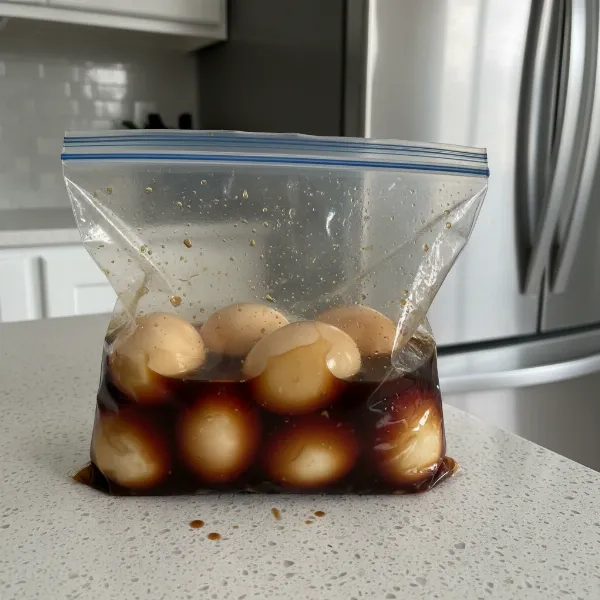 Peeled soft-boiled eggs marinating in a clear plastic bag with a soy-based sauce.
Troubleshooting and Expert Tips for Ramen Egg Success
Even seasoned cooks can encounter a hiccup or two. Here are some common issues and how to resolve them, along with pro tips:
- Overcooked Yolks: If your yolks are too firm, reduce your cooking time by 30 seconds to 1 minute in the next batch. Remember that egg size and starting temperature can affect results.
- Stuck Shells: This is often due to very fresh eggs or insufficient chilling in the ice bath. Using slightly older eggs (a week or so after purchase) and ensuring a full 15-minute ice bath can make a significant difference. Peeling under cold water also helps.
- Cracked Shells: Dropping eggs too forcefully into the boiling water, or a rolling boil that causes eggs to jostle, are common culprits. Always lower eggs gently with a spoon and maintain a gentle simmer.
- Yolks Not Centered: Gently rotating the eggs for the first 2-3 minutes of boiling can help center the yolks.
- Adjusting for Altitude: If you live at high altitude, water boils at a lower temperature, which means eggs might need slightly longer to cook. You may need to experiment by adding an extra 30 seconds to 1 minute to your usual cooking time.
“The perfect ramen egg isn’t just about the cooking; it’s about the entire process, from a gentle entry into boiling water to the crucial ice bath and the overnight marinade. Each step contributes to that unforgettable taste and texture.” – Admin, eggcookersreview.com
Storing and Serving Your Delicious Ramen Eggs
Once your ramen eggs are perfectly marinated, knowing how to store them properly and the best ways to enjoy them will ensure you get the most out of your efforts.
Storage
- Refrigeration is Key: Soft-boiled ramen eggs should always be stored in an airtight container in the refrigerator.
- Timing is Everything: For optimal taste and safety, it’s best to consume soft-boiled ramen eggs within 3-4 days.
- Marinade Removal: To prevent the eggs from becoming excessively salty, it is recommended to remove them from the marinade after 12-24 hours and store them separately in a clean, airtight container. Do not reuse the marinade for new eggs for food safety reasons, though it can sometimes be repurposed as a seasoning in other cooked dishes if used immediately.
- Do Not Freeze: Freezing ramen eggs is not recommended as it will drastically alter their delicate texture.
Serving Suggestions
Your delicious ramen eggs are incredibly versatile and can elevate many dishes:
- Ramen Topping: This is their classic role! Halve them lengthwise with a sharp knife or a piece of thread and place them artfully on top of your favorite ramen bowl, whether it’s miso, shoyu, or tonkotsu.
- Bento Box Addition: A flavorful and visually appealing component for any Japanese-style packed lunch.
- Quick Snack: Enjoyed on their own, perhaps with a sprinkle of furikake (Japanese rice seasoning) or shichimi togarashi (Japanese seven-spice blend) for an extra kick.
- Salads: Sliced and added to green salads for a boost of protein and umami.
- Rice Bowls: A fantastic topping for donburi (rice bowls) or simple steamed rice.
- Avocado Toast: For a gourmet breakfast or brunch, pair a halved ramen egg with creamy avocado toast.
- Curry Dishes: A surprising but delicious accompaniment to Japanese curry.
Conclusion
Mastering the art of making soft-boiled eggs for ramen, or *Ajitsuke Tamago*, is a culinary skill that will undoubtedly enhance your home cooking repertoire. From the precise timing of the boil to the essential ice bath and the flavorful overnight marinade, each step contributes to creating an egg that is truly a cut above the rest. With their jammy yolks, tender whites, and savory-sweet flavor, these ramen eggs are more than just a topping; they’re a statement. So, embrace the journey, follow these steps, and prepare to impress yourself and your loved ones with these perfectly crafted, umami-rich delights. What new dish will you elevate with your homemade ramen eggs first?
Frequently Asked Questions
What is the ideal yolk consistency for ramen eggs?
The ideal yolk consistency for ramen eggs is typically a “jammy” or “custardy” texture. This means the yolk is not fully liquid but also not completely solid, offering a rich, creamy, and slightly gooey center that adds luxuriousness to ramen and other dishes. Achieving this usually requires a boiling time of 6 to 7 minutes for large eggs.
How long can I store ramen eggs?
Soft-boiled ramen eggs are best consumed within 3-4 days when stored in an airtight container in the refrigerator. To prevent them from becoming too salty, it’s advisable to remove them from the marinade after 12-24 hours and store them separately.
Can I reuse the ramen egg marinade?
For food safety reasons, it is generally not recommended to reuse the marinade for subsequent batches of eggs, as it has come into contact with the peeled eggs. While some sources suggest repurposing it as a seasoning for cooked dishes, it should be used immediately and heated thoroughly.
Why do my soft-boiled eggs stick to the shell when peeling?
Eggs often stick to the shell if they are very fresh, or if they haven’t been adequately shocked in an ice bath immediately after boiling. Using slightly older eggs (a few days past purchase) and ensuring they cool in an ice bath for at least 15 minutes helps the membrane separate from the shell, making them much easier to peel cleanly.
What if I don’t have sake for the marinade?
While sake adds a unique depth of flavor and umami to the marinade, you can substitute it with an equal amount of water. The resulting ramen eggs will still be delicious, but the sake provides an extra layer of complexity that is characteristic of authentic Ajitsuke Tamago.